A Trustworthy PCB and Electronic Manufacturing Enterprise! Contact Us



The rapid evolution of consumer electronics has moved us beyond the era of rigid, boxy devices. Today, our technology is expected to bend, fold, and even wrap around the human body. Whether it is a foldable smartphone or a continuous glucose monitor, the magic behind these innovations lies in the specialized materials used in their construction. At the core of every bendable circuit is a high-performance flexible pcb substrate. This material serves as the foundation that allows copper traces to be bent thousands of times without breaking, providing the perfect blend of mechanical agility and electrical reliability.
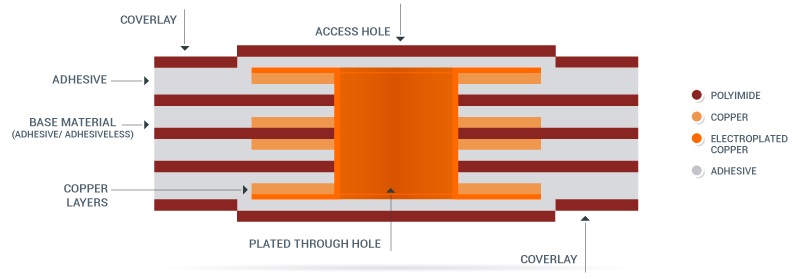
flexible pcb substrate
What is a Flexible PCB Substrate?
Unlike traditional rigid boards that use a thick core of epoxy-infused glass fiber (FR4), a flexible pcb substrate is remarkably thin, often measured in micrometers. The structure typically consists of three layers: a thin insulating base film, a conductive copper foil, and often a layer of adhesive to bond them together.
The defining characteristic of this substrate is its ability to deform under stress and return to its original shape—or remain in a folded state—without cracking. This allows designers to fit complex electronics into non-rectangular enclosures, effectively utilizing the third dimension to save space and reduce the overall weight of the device.
Key Materials: Polyimide versus Polyester
Selecting the right material for your flexible pcb substrate depends heavily on your product’s operating environment.
---Polyimide (PI) is the most common choice for professional and industrial applications. It is prized for its incredible thermal resistance, allowing it to withstand the high temperatures required for lead-free soldering processes. Furthermore, PI remains stable during extreme temperature fluctuations, making it ideal for aerospace and automotive sensors.
---Polyester (PET), on the other hand, is a more economical alternative. While it is highly flexible, PET has a lower melting point, meaning it cannot easily undergo traditional soldering. It is typically used for simpler applications like membrane switches or low-cost toys where high heat resistance is not required. For most modern high-tech designs, however, a PI-based flexible pcb substrate remains the gold standard for performance.
Essential Properties for Design Success
When engineers evaluate a flexible pcb substrate, they look at more than just how much it can bend. Flexural Endurance is a critical metric, representing how many thousands of cycles a board can withstand before a trace fractures.
Additionally, Thermal Stability is paramount. During the manufacturing process, the substrate must not shrink or expand excessively, as this could misalign the microscopic circuit patterns. Modern high-quality substrates are also designed to be highly resistant to chemicals and moisture, ensuring that the electronics remain functional even when exposed to sweat in wearable devices or engine fluids in automotive applications.
Why Substrate Quality Matters for Modern Applications
In the medical field, the reliability of a flexible pcb substrate can be life-altering. In devices like pacemakers or hearing aids, the substrate must be biocompatible and small enough to fit inside the human body.
In the automotive industry, the shift toward electric vehicles (EVs) has created a massive demand for flexible circuits. These are used in Battery Management Systems (BMS) where they must wrap around battery cells to monitor voltage and temperature. The high vibration environment of a vehicle makes the mechanical resilience of the flexible substrate far superior to traditional wiring harnesses, which are prone to fatigue and failure over time.
Conclusion
The future of hardware is undeniably flexible. As we continue to integrate electronics into our clothing, our cars, and even our bodies, the structural integrity of the base materials will dictate the limits of innovation. A high-quality flexible pcb substrate is no longer just a component; it is a critical design enabler that allows for thinner, lighter, and more durable products. By choosing a substrate that balances thermal performance with mechanical flexibility, manufacturers can ensure their designs are ready to meet the rigorous demands of the modern, mobile world. In the high-stakes landscape of electronics manufacturing, the right flexible pcb substrate provides the resilience needed for tomorrow's technology.