A Trustworthy PCB and Electronic Manufacturing Enterprise! Contact Us



As electronic devices push the boundaries of power and speed, traditional circuit board materials are reaching their physical limits. High-performance computing, aerospace systems, and advanced telecommunications generate intense heat that can cause standard fiber-glass boards to warp or fail. To solve these critical thermal and signal integrity issues, engineers are increasingly turning to the ceramic multilayer pcb. By utilizing the unique properties of ceramic substrates, these boards provide a robust foundation for the most demanding electronic environments on Earth—and beyond.
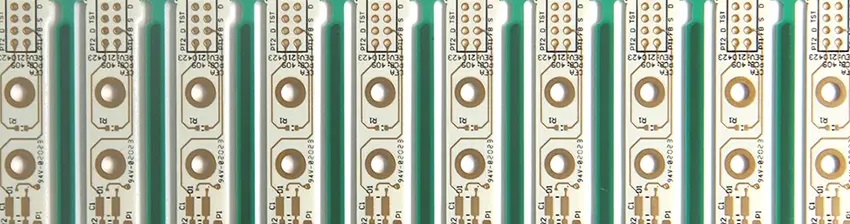
ceramic multilayer pcb
What is a Ceramic Multilayer PCB?
A ceramic multilayer pcb is a circuit board that uses inorganic ceramic materials, such as Alumina (Al2O3) or Aluminum Nitride (AlN), as its base substrate instead of the typical epoxy resin. Unlike single-layer ceramic boards, the multilayer version incorporates several layers of conductive traces separated by ceramic insulation, all bonded together through high-temperature firing processes.
These boards are typically manufactured using two primary technologies: LTCC (Low Temperature Co-fired Ceramic) and HTCC (High Temperature Co-fired Ceramic). These methods allow for the integration of passive components like resistors and capacitors directly into the internal layers, significantly reducing the overall footprint of the device while improving performance.
Key Advantages over Traditional Materials
The primary reason designers choose ceramic over FR4 or metal-clad boards is Thermal Conductivity. While standard FR4 is an insulator that traps heat, ceramic materials can move heat away from components up to 20 to 100 times faster. Aluminum Nitride, for instance, offers thermal conductivity levels exceeding170W/mK, making it ideal for power-hungry semiconductors.
Another critical factor is the CTE (Coefficient of Thermal Expansion) Match. Ceramic substrates have a CTE very close to that of silicon chips. This means that as the device heats up and cools down, the board and the chip expand and contract at nearly the same rate, preventing the solder joints from cracking—a common cause of failure in high-reliability electronics. Additionally, ceramic is naturally hermetic, meaning it is impervious to water and gas, which protects delicate internal circuits from environmental degradation.
Leading Applications in High-Tech Industries
Because of its durability and efficiency, the ceramic multilayer pcb is found in sectors where failure is not an option.
---Aerospace and Defense: Used in radar systems and satellite communication modules where boards must survive vacuum conditions and extreme temperature swings.High
---Power LED and Laser Tech: These components generate massive heat in small areas; ceramic boards prevent the light decay caused by overheating.
---Automotive Electronics: As electric vehicles (EVs) adopt Silicon Carbide (SiC) inverters, ceramic boards provide the thermal stability needed for high-voltage power conversion.
Technical Challenges and Design Considerations
While the benefits are clear, designing a ceramic multilayer pcb requires specialized knowledge. Ceramic is inherently brittle compared to flexible or rigid-flex boards, meaning the layout must account for mechanical stress to prevent cracking during assembly. Furthermore, the manufacturing process involves shrinking during the firing phase, which requires extremely precise scaling and alignment of the conductive layers to ensure the vias connect perfectly. Despite these complexities, the result is a circuit board that offers unparalleled stability and a lifespan that far exceeds organic alternatives.
Conclusion
In the race toward 5G, autonomous driving, and deep-space exploration, the hardware foundation must be as innovative as the software it runs. The ceramic multilayer pcb stands at the forefront of this technological shift, offering the thermal management and signal clarity required for the next generation of hardware. By choosing ceramic over traditional substrates, manufacturers can ensure their devices are not only faster and smaller but also significantly more reliable in the face of extreme heat and environmental stress. Ultimately, the ceramic multilayer pcb is the key to unlocking the full potential of high-power electronics in a world that never stops pushing for more performance.