A Trustworthy PCB and Electronic Manufacturing Enterprise! Contact Us



In an era where extreme weather events are becoming more frequent and unpredictable, the accuracy of meteorological forecasting has never been more vital. Modern society relies on early warning systems to protect lives and infrastructure from hurricanes, tornadoes, and flash floods. At the heart of these advanced detection systems lies the weather radar pcb, a highly specialized piece of hardware designed to process high-frequency signals with extreme precision. Without the stability and sensitivity provided by these professional-grade circuit boards, the ability to turn raw atmospheric data into life-saving information would be compromised.
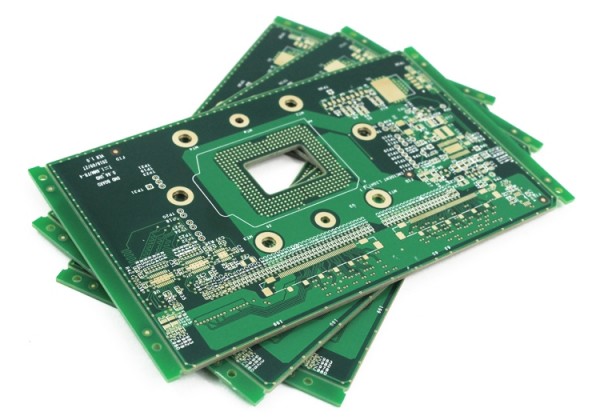
weather radar pcb
The High-Frequency Challenge in Radar Circuitry
Weather radar systems operate within the microwave frequency bands (such as S, C, or X-band), sending out powerful pulses of energy and listening for tiny echoes reflected from raindrops or ice crystals. Because these echoes are incredibly faint, the circuit board must maintain an exceptionally high signal-to-noise ratio. A standard circuit board is often plagued by signal "leakage" or interference at these frequencies. To overcome this, a professional weather radar pcb is engineered to minimize signal attenuation, ensuring that the radar can "see" through heavy precipitation and provide a clear picture of the atmosphere.
Critical Material Selection Beyond Standard FR-4
When designing a high-performance weather radar pcb, the choice of substrate material is the most important decision. While standard electronics use affordable FR-4 material, radar systems demand specialized high-frequency laminates like PTFE (Teflon) or Rogers materials.
Standard FR-4 is unsuitable because its dielectric constant (Dk) fluctuates with temperature and frequency, which can distort radar signals. In contrast, specialized radar materials offer a stable and low dielectric constant, ensuring that signal velocity remains consistent. Furthermore, these professional materials have a much lower dissipation factor (Df). While FR-4 might "absorb" a significant portion of the high-frequency energy as heat, radar-grade materials allow the signal to pass through with almost zero loss. Additionally, materials used in radar boards must have extremely low moisture absorption. Even a tiny amount of humidity can change the electrical properties of the board, but specialized PTFE substrates remain stable even in the most humid tropical environments.
Precision Manufacturing and Impedance Control
The manufacturing of a weather radar pcb involves much tighter tolerances than a typical consumer motherboard. One of the greatest challenges is maintaining strict impedance control. In high-speed RF circuits, the width and thickness of the copper traces must be accurate to within a few microns. Any slight variation can cause signal reflections, which lead to "ghost" images or false readings on the radar display.
Furthermore, many modern radar systems utilize complex multilayer designs. These require advanced drilling techniques, such as blind and buried vias, to connect internal signal layers without creating "stubs" that act as unwanted antennas. This level of manufacturing precision ensures that the radar maintains its sensitivity even when tracking small, fast-moving weather patterns.
Durability Against Extreme Environmental Stress
Weather radars are frequently deployed in the world's most unforgiving locations—atop freezing mountain peaks, in salty coastal regions, or in scorching deserts. Therefore, a reliable weather radar pcb must be built to withstand extreme environmental stress.
To protect against corrosion and oxidation, manufacturers apply specialized conformal coatings. These thin, protective layers shield the delicate copper traces from salt spray and humidity, which are common causes of failure in outdoor electronics. Moreover, the board must have an optimized Coefficient of Thermal Expansion (CTE). This ensures that when the temperature swings from -40°C at night to +50°C during the day, the different layers of the PCB do not delaminate or crack under the physical strain of expansion and contraction.
Reliability Testing and Industry Compliance
Because these boards are used for critical safety infrastructure, every weather radar pcb must undergo rigorous testing before deployment. This process includes automated optical inspection (AOI) to find microscopic defects and thermal cycling to simulate years of field use. Signal integrity simulations are also performed to ensure that the physical board matches the digital design's performance. These tests guarantee that when a storm is approaching, the radar hardware will function flawlessly, providing meteorologists with the reliable data they need to issue timely warnings.
Conclusion
The technology behind our daily weather reports is a marvel of modern hardware and software integration. While the software interprets the data, it is the physical weather radar pcb that captures and processes the raw signals from the sky. By utilizing high-frequency materials, maintaining microscopic manufacturing tolerances, and ensuring rugged durability, these boards serve as the silent sentinels of our global weather monitoring network. Investing in a premium weather radar pcb is not merely a technical choice; it is a commitment to the accuracy and reliability that keeps communities safe in an increasingly volatile climate.