A Trustworthy PCB and Electronic Manufacturing Enterprise! Contact Us


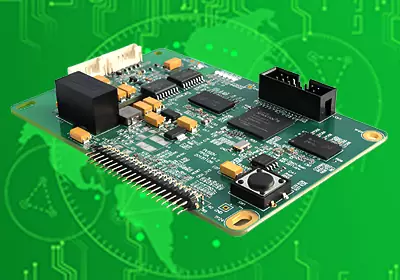
Professional soldering demands flawless, robust, and inspectable joints. This guide moves beyond the basics, focusing on advanced skills, thermal management, and detailed procedures on how to solder circuit board components to meet industrial quality standards.
Tool Optimization and Thermal Control
The quality of the joint is determined less by the heat of the iron and more by the efficiency of heat transfer, which starts with tool selection and temperature management.
1. Tip Geometry Selection
Choosing the correct tip size and shape is vital for maximizing heat transfer efficiency.
---Chisel Tip: Ideal for through-hole technology (THT) and larger surface-mount devices (SMD). Its flat face provides a large thermal mass for rapid, uniform heat delivery, reducing the total time the iron is on the board.
---Hoof/Bevel Tip: Excellent for drag soldering fine-pitch components (like QFPs). The slanted edge allows flux and solder to pool, making it easier to sweep across multiple pins.
---Pointed/Conical Tip: Reserved for extremely fine-pitch or specialized rework, offering precision but often lacking the thermal mass for larger pads.
2. Temperature and Thermal Mass
Do not rely solely on high temperatures. The ideal temperature is determined by the solder alloy (lead-free requires higher heat, ≈370℃; leaded, ≈320℃. Crucially, select a tip with a thermal mass that matches the combined mass of the pad and component lead. A tip that is too small will require excessive contact time, leading to PCB delamination or pad lifting.
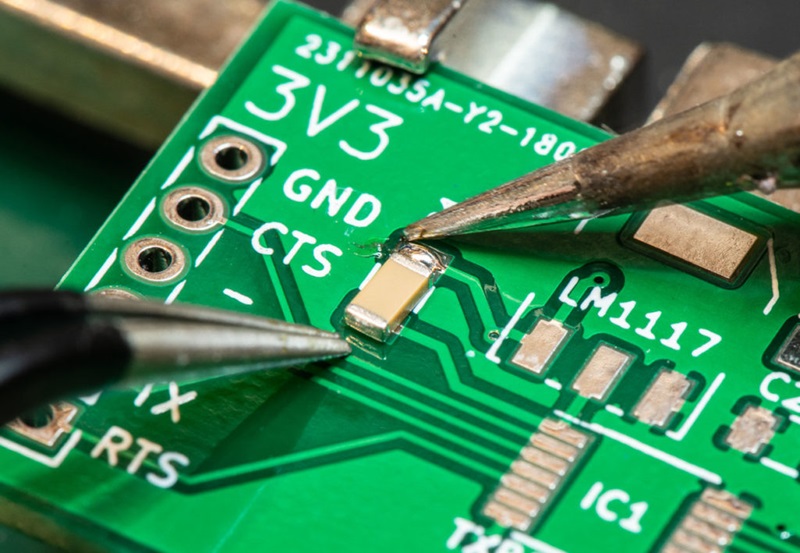
how to solder circuit board
Preparation: Flux and Surface Treatment
A professional joint relies on chemically clean surfaces, which is where flux plays a pivotal, often misunderstood, role.
1. Activated Flux Use
While most solder wire contains flux (rosin-core), applying extra, highly-activated flux (via a liquid dispenser or flux pen) is essential for professional work, especially with lead-free solder. The flux removes oxidized metal layers, allowing the molten solder to "wet" and flow across the copper surface through capillary action. Always apply external flux to the joint area just before applying the iron.
2. Surface Preparation
Ensure both the PCB pad and the component lead are free of heavy oxidation. For older boards, a gentle cleaning process is necessary. Pre-tinning—applying a thin layer of fresh solder to large, bare copper pads before assembly—greatly improves the joint's final wetting angle and adhesion quality. This meticulous preparation is foundational to how to solder circuit board components reliably.
Specialized Technique 1: Through-Hole (THT) Precision
THT soldering requires precise control over the heat duration to ensure reliability without damaging the multilayer structure of the PCB.
1. The Two-Second Rule
The duration the iron is in contact with the joint is critical. For standard THT joints, the contact time should not exceed 3-4 seconds. This narrow window is sufficient to heat the pad, lead, and barrel evenly, but short enough to prevent the board adhesive from failing (delamination) or damaging the component.
2. Solder Flow and Wetting Angle
The goal is to achieve a perfect concave meniscus (or cone) where the solder flows up the lead and meets the pad cleanly. The ideal wetting angle is near zero degrees, meaning the solder appears feathered smoothly onto the pad, showing that the solder was drawn by the heat of the metals, not simply pushed by the iron. Avoid excessive solder, which creates a large "ball" that hides the quality of the actual connection.
Specialized Technique 2: Surface Mount Device (SMD) Mastery
Soldering small, closely spaced SMDs requires specialized techniques focused on control and speed.
1. The Two-Step Method (for Chips)
For soldering two-pin components (resistors/capacitors) or chips with few pins:Apply a small amount of solder (pre-tin) to one pad on the PCB.Hold the component in place, heat the pre-tinned pad, and slide the component into the molten solder.Once the first pin is fixed, apply fresh flux to the second pad, heat the second pad, and introduce the solder. This stabilizes the component perfectly before final soldering.
2. Drag Soldering (for QFPs/Fine Pitch)
When dealing with integrated circuits with many fine pins (Quad Flat Packs - QFPs), how to solder circuit board pins effectively involves drag soldering:
---Apply generous liquid flux across the entire row of pins.
---Use a large bevel or hoof tip heavily loaded with solder.
---Smoothly drag the tip across the pins in one continuous motion, ensuring the tip contacts both the pin and the pad simultaneously.
---After the drag, use solder wick and extra flux to remove any residual solder bridges (shorts) between the fine pins. This technique is fast and highly repeatable.
Inspection and Rework
A professional process always concludes with rigorous inspection and the ability to cleanly rework any flaws.
1. Inspection Criteria
Use magnification (10x minimum) to inspect every joint. Look for smooth, bright surfaces (not dull and gritty, which indicates a cold joint), full wetting around the lead, and the absence of any micro-cracks or solder bridges. Mastering how to solder circuit board connections requires developing an eye for a perfect joint.
2. Desoldering Precision
When rework is necessary, minimize thermal exposure. When using braided copper wick, place the wick on the joint and apply the iron to the top of the wick. The heat transfers, melting the solder, and the wick absorbs the molten metal through capillary action. Never press the wick for extended periods, as this risks overheating the PCB.
Conclusion
Professional soldering is a commitment to the craft. It demands mastery of tool settings, precise thermal control, and the disciplined application of specialized techniques like drag soldering and meticulous flux management. By prioritizing these detailed processes, the operator ensures not just an electrical connection, but a reliable, durable, and inspectable bond. Mastering how to solder circuit board components correctly is, therefore, the true mark of an electronics professional.