A Trustworthy PCB and Electronic Manufacturing Enterprise! Contact Us


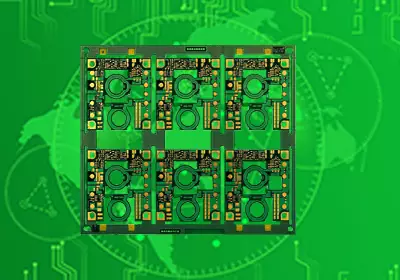
In high-power LED lighting and automotive power modules, engineers often encounter a frustrating paradox: even when using a metal substrate, the components still suffer from thermal throttling or premature failure. The culprit is rarely the aluminum base itself, but rather the "thermal barrier" created by the dielectric layer. For an engineer, selecting aluminum PCB boards isn't just about choosing a metal plate; it’s about managing the total thermal resistance (Rth) of the stack-up. If the dielectric layer is poorly specified, it acts as an insulator not just for electricity, but for heat, effectively trapping energy at the semiconductor junction and negating the benefits of the metal core.
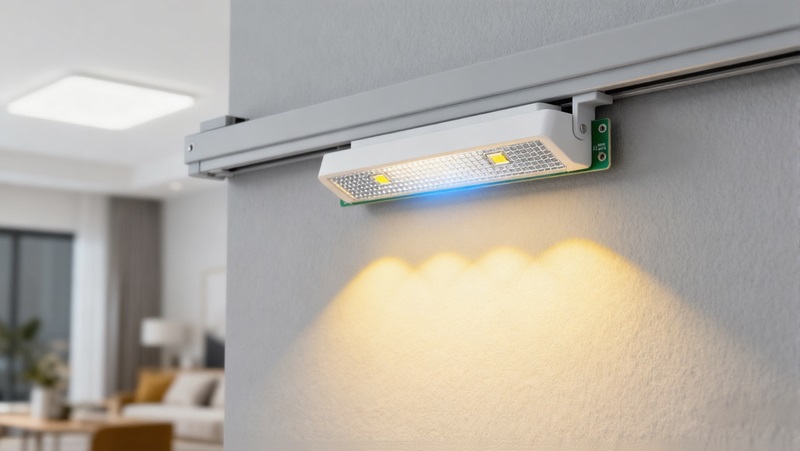
aluminum PCB board
The Hidden Barrier: Understanding Dielectric Thermal Resistance
To understand why an aluminum PCB board might fail to perform, we must examine the cross-section. The dielectric layer—usually a ceramic-filled polymer—is the thin interface between the copper circuit and the aluminum base. In thermal physics, the resistance of this layer is defined by R=L/(k∙A) (where L is the thickness and k is the conductivity).
In practical applications, this layer is often the "bottleneck." While aluminum has a conductivity of ≈200W/mK, a standard dielectric layer might only offer 1.0 W/mK. Even at a thickness of only 100 \mum, this layer can account for over 80% of the total thermal path resistance. For engineers working on 50W + COB (Chip on Board) designs, failing to minimize this specific Rth means the junction temperature (Tj) will quickly exceed safe limits, leading to color shifting in LEDs or catastrophic failure in MOSFETs.
Choosing the Right Ceramic-filled Polymer
When specifying aluminum PCB boards, you will see ratings from 1.0 W/mK up to 8.0 W/mK. A common mistake is over-specifying for cost-sensitive projects or under-specifying for high-density ones.
For a mid-range automotive auxiliary light, a 2.0 W/mK dielectric is often the "sweet spot." However, it's not just about the k value. Engineers must also consider the Hi-Pot (High Potential) test requirements. A thinner dielectric layer reduces thermal resistance but lowers the breakdown voltage. In power supply designs where 3000V isolation is required, you must balance the dielectric thickness (L) to ensure safety compliance while still maintaining an acceptable thermal gradient.
Practical Design Fixes: Beyond the Material
Beyond material selection, engineers can use several "pro-tips" to optimize their aluminum PCB boards:
1. Solder Mask Expansion: On high-power pads, expanding the solder mask opening (or removing it entirely around the heat-slug) can prevent the solder mask from acting as a secondary thermal insulator.
2. Heavy Copper Traces: Using 2oz or 3oz copper allows for better lateral heat spreading. This "spreader" effect increases the effective area (A) through which heat enters the dielectric, significantly lowering the local heat flux density.
3. Pedestal Designs (Thermo-Electric Separation): For extreme applications, consider a "copper pedestal" design where the LED's thermal pad is directly soldered to a copper post that penetrates the dielectric to touch the metal base. This effectively reduces the dielectric thermal resistance to zero for the most critical heat path.
Conclusion
Thermal management is a game of millimeters and material science. Selecting the right aluminum PCB boards requires more than a glance at a datasheet; it requires a strategic evaluation of the dielectric interface. By focusing on the thermal conductivity of the polymer, optimizing pad layouts, and balancing isolation needs with heat dissipation, engineers can significantly extend the lifespan of their power electronics. In the competitive world of industrial and automotive hardware, the difference between a product that lasts five years and one that fails in six months often comes down to these microscopic design choices. Ultimately, a well-engineered aluminum substrate is the most cost-effective insurance policy you can buy for your high-power innovations.