A Trustworthy PCB and Electronic Manufacturing Enterprise! Contact Us


As the demand for smaller, lighter, and more sophisticated electronic devices grows, engineers face the constant challenge of packing more functionality into shrinking footprints. From foldable smartphones to high-resolution medical imaging tools, the internal architecture of these devices requires interconnections that are both flexible and extremely reliable. This is where FPC connectors play a vital role. By providing a secure interface between FPC and the main rigid PCB, these connectors enable seamless data and power transmission in three-dimensional spaces. Without the space-saving benefits of this technology, the sleek and compact designs of modern consumer and industrial electronics would simply not be possible.
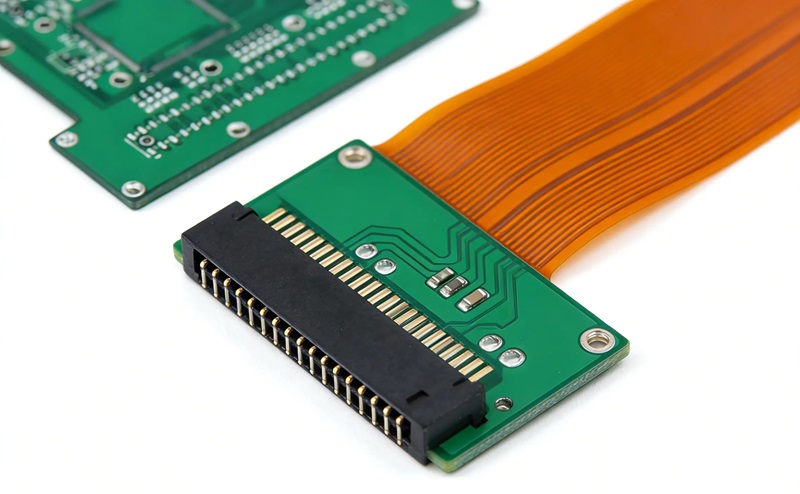
FPC connector
What are FPC Connectors?
An FPC connector is a specialized surface-mount component designed to terminate a flexible ribbon-like cable. Unlike traditional wire-to-board connectors that use bulky plastic housings and thick copper wires, these components are engineered for precision and low profiles.
The internal anatomy of a typical fpc connectors unit consists of a high-temperature plastic housing, rows of metallic terminals, and often a locking actuator. The terminals are gold-plated to ensure excellent conductivity and resistance to oxidation, while the actuator is used to exert pressure on the inserted FPC cable, ensuring a stable electrical contact that can withstand external shocks and vibrations.
Major Types and Locking Mechanisms
Choosing the right locking mechanism is essential for the long-term reliability of your assembly. There are two primary categories: ZIF (Zero Insertion Force) and Non-ZIF.
ZIF Connectors: These utilize an actuator (a small lever or slider) to open and close the contact area. When the lever is open, the FPC cable can be inserted with zero friction, protecting the delicate gold fingers of the cable from wear.
Non-ZIF Connectors: These rely on frictional force to hold the cable in place. While simpler and often more cost-effective, they are generally reserved for static applications where the cable is not expected to be removed or adjusted frequently.
Within the ZIF category, you can choose between Flip-lock, Slider, or Back-flip designs. The Back-flip style is particularly popular in ultra-thin devices because it allows the cable to be inserted from the front while the locking mechanism is operated from the rear, providing superior retention force in a very tight vertical space.
Key Benefits for Modern Engineering
The move toward FPC connectors is driven by several distinct engineering advantages. First and foremost is space efficiency. With pitch sizes as small as 0.3mm and heights often below 1.0mm, these connectors allow designers to route signals through narrow hinges or around internal batteries.
Secondly, they offer exceptional durability in dynamic environments. Because the FPC cable itself is thin and lightweight, it exerts very little mechanical stress on the connector during vibration. This makes the system ideal for automotive displays or robotic arms that are in constant motion. Additionally, using a single flexible cable with multiple signal lines significantly reduces the risk of "wiring tangles" and assembly errors compared to traditional discrete wire harnesses.
Critical Selection Criteria
When specifying FPC connectors for a new project, engineers must look beyond just the number of pins. One of the most common mistakes is overlooking the contact position. These connectors are available in "Top Contact," "Bottom Contact," and "Dual Contact" configurations. You must ensure that the gold-plated fingers of your FPC cable match the contact side of the connector to avoid a dead circuit.
Other factors include the current rating—especially if the FPC is being used for battery charging—and the data speed requirements. As 5G and high-definition video become standard, many manufacturers now offer shielded versions of these connectors to prevent electromagnetic interference (EMI) from degrading the signal quality.
Conclusion
The future of hardware is undeniably flexible. As we transition into an era of wearable healthcare monitors, autonomous vehicle interiors, and foldable mobile tech, the importance of reliable interconnection will only increase. High-quality FPC connectors provide the perfect balance of mechanical flexibility and electrical precision, allowing engineers to push the boundaries of what is possible in industrial design. By selecting a connector that matches your thermal, mechanical, and signal requirements, you can ensure that your product remains robust and functional even in the most demanding environments. In the high-stakes world of electronic manufacturing, the right FPC connectors are the key to unlocking true design freedom and long-term product success.