A Trustworthy PCB and Electronic Manufacturing Enterprise! Contact Us


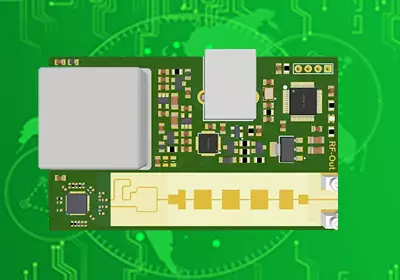
Anyone passionate about electronic design surely knows that the importance of pcb board layout.
1. First, we place components with structural requirements. When placing them, pay attention to the placement of pin 1 for connectors based on the imported structure.
2. During layout, observe height restrictions specified in the structure.
3. For aesthetic layout, generally position components by their outer frames or centerline coordinates (center alignment).
4. Consider heat dissipation in the overall layout.
5. During placement, evaluate routing paths and allocate space for trace length matching.
6. Consider power flow direction and assess power delivery paths.
7. Separate high-speed, medium-speed, and low-speed circuits.
8. Position high-current, high-voltage, and high-radiation components away from low-current, low-voltage, and sensitive components.
9. Separate analog, digital, power supply, and protection circuits.
10. Place interface protection components as close to the interface as possible.
11. Sequence requirements for interface protection components:
(1) For power supply surge protection, the typical sequence is: varistor, fuse, suppression diode, EMI filter, inductor or common-mode choke. If any component is missing from the schematic, extend the layout accordingly.
(2) General sequence for interface signal protection: ESD (TVS diode), isolation transformer, common-mode choke, capacitor, resistor. If any component is missing from the schematic, adjust the layout accordingly. Strictly follow the schematic sequence (requires the ability to verify schematic accuracy) for “in-line” placement.
12. Level-shifting chips (e.g., RS232) should be placed near their connectors (e.g., serial ports).
13. Components susceptible to ESD interference (e.g., NMOS, CMOS devices) should be kept as far as possible from ESD-vulnerable areas (e.g., board edges).
14. Clock component placement:
(1) Place crystals, oscillators, and clock distributors as close as possible to related ICs.
(2) Position clock circuit filters (preferably “π” type) near the clock circuit's power input pins.
(3) Verify whether a 22-ohm resistor is series-connected to the oscillator or distributor output.
(4) Are unused output pins of the clock distributor grounded via resistors?
(5) Position crystals, oscillators, and clock distributors away from high-power components, heat sinks, and other heat-generating devices.
(6) Is the distance between oscillators and board edges/interface components greater than 1 inch?
15. Ensure switching power supplies are isolated from AD/DA converters, analog components, sensitive devices, and clock components.
16. Compactly layout the switching power supply, separating input and output. Strictly follow schematic requirements for placement; do not arbitrarily position power supply capacitors.
17. Capacitors and filter components: (1) Capacitors must be placed close to power pins, with smaller capacitance values positioned nearer to the power pins; (2) EMI filters should be placed near the chip's power input port; (3) As a rule, each power pin should have one small 0.1μF capacitor, and each integrated circuit should have one or more large 10μF capacitors. Adjustments can be made based on specific circumstances.
After reading this article, I believe you will have a better understanding of pcb board layout.