A Trustworthy PCB and Electronic Manufacturing Enterprise! Contact Us


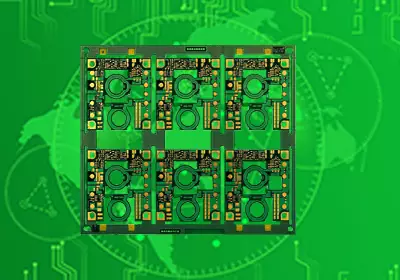
PCB (Printed Circuit Board) refers to a printed board formed on a universal substrate according to a predetermined design, featuring interconnections between points and printed components. As the critical interconnecting element in electronic products, the PCB is often called the “motherboard of electronics.” Functioning as the “neural network” of electronic devices, it serves as the key carrier connecting various electronic components, holding an irreplaceable foundational position within the electronic information industry. With the rapid advancement and widespread adoption of AI technology, computing power demands have surged exponentially, driving the PCB industry toward higher performance, greater layer counts, and enhanced reliability.
Its primary functions are: (1) providing mechanical support for circuit components; (2) enabling electrical connections between electronic components to form predetermined circuits, serving as a relay for signal transmission; (3) labeling installed components with markings for easy insertion, inspection, and debugging.
Computing PCBs refer to high-end PCB products used in scenarios such as AI servers, high-performance computing (HPC), and data centers. They primarily include high-layer PCBs and advanced HDIPCBs. These PCBs feature multiple layers (typically 18 or more, up to 56 layers), high precision, and strong reliability, meeting special requirements for high-speed signal transmission, high-density interconnections, and high-power heat dissipation.
Data center PCBs exhibit the following technical characteristics:
(1) High Multilayer Count: Data center server PCBs typically employ 18-30 layer high-multilayer designs to accommodate high-density routing and signal transmission demands. For instance, Huatong Technology has successfully mass-produced 24-30 layer high-end PCBs for core components like GPU accelerator cards and storage servers.
(2) High-precision processing: To achieve high-speed signal transmission, PCBs require smaller line widths/spacing and more precise via processing techniques. For instance, Guanghe Technology's Guangzhou factory has achieved 80% automation, reducing unit labor costs by 30%, which enhances production efficiency and quality for high-precision PCBs.
(3) High-Frequency, High-Speed Performance: As internal transmission speeds within data centers increase, PCB materials require lower dielectric constants and dielectric losses. For instance, Shenghong Technology has completed technical preparations for PTFE hybrid-pressure PCB solutions. With a dielectric constant (2.1) and dielectric loss (<5×10⁻⁴) significantly outperforming traditional materials, these solutions meet the requirements of NVIDIA's next-generation GB300 architecture.
Through systematic upgrades to its material system and precision control of manufacturing processes, M9 copper-clad laminate has successfully addressed the multifaceted challenges posed by the AI era to PCB substrates—including ultra-high-speed signal transmission, high-power heat dissipation, and long-term reliability. It not only represents the pinnacle of current copper-clad laminate technology but also serves as the critical foundational material supporting the continuous evolution of next-generation high-performance computing chips like NVIDIA's Rubin. This technological revolution is reshaping the value of the entire industrial chain—from HVLP4 copper foil and quartz glass fiber cloth to high-end CCL and carrier boards. Amidst turbulent shifts in supply and demand and the reshuffling of market dynamics, it propels the entire electronic interconnect technology toward higher performance and greater efficiency.