A Trustworthy PCB and Electronic Manufacturing Enterprise! Contact Us


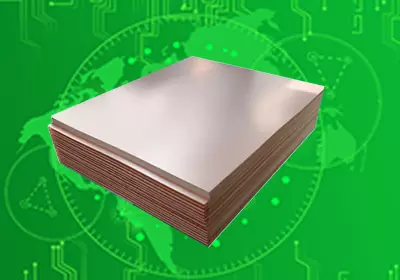
Printed Circuit Boards (PCBs) are the core of electronic devices, as they connect, support and protect electronic components. A PCB's performance and application scope depend directly on material selection. As a professional PCB manufacturer, we elaborate on key PCB materials, their characteristics and applicable scenarios to assist your project decisions.
Core Substrate Materials: The Foundation of PCBs
As the basic material of PCBs, substrates provide electrical insulation and mechanical support, accounting for the largest proportion of PCB materials. They are classified by resin type, reinforcing material and application needs, with common types as follows:
FR-4 Epoxy Glass Cloth Substrate
FR-4 is the most widely used PCB substrate, with "FR" meaning flame-retardant grade 4. Composed of epoxy resin, glass fiber cloth and bonded copper foil, it is the industry standard for general applications.
Key characteristics: Excellent electrical insulation, good mechanical strength, Tg value 130°C - 180°C, flame retardant and easy to process.
Application: Consumer electronics, industrial control, automotive electronics (non-high-temperature parts) and communication devices.
High-Tg FR-4 Substrate
High-Tg FR-4 is an upgraded version with Tg > 170°C (170°C - 220°C). A higher Tg ensures stable performance under high-temperature conditions.
Key characteristics: Superior high-temperature resistance, low thermal expansion coefficient and good dimensional stability.
Application: High-temperature soldering scenarios (e.g., lead-free soldering), automotive electronics (ECUs, sensors), industrial power supplies and high-power devices.
High-Frequency PCB Substrate Materials
High-frequency PCBs (5G, radar, satellite communication) require low Dk/Df substrates. Common options: PTFE, Rogers series (RO4350B, RO4003C) and ceramic substrates.
Key characteristics: Low signal delay/distortion and energy loss. PTFE has excellent corrosion resistance but high cost; Rogers balances performance and processability for high-end communication products.
Application: 5G base stations, mobile RF modules, radar and satellite communication equipment.
Other Special PCB Substrates
• Aluminum-Based Substrates: High thermal conductivity, for heat-dissipating PCBs (LED lighting, power amplifiers, automotive LED headlights).
• Flexible Substrates (FPC): PI/PET base film with copper foil, bendable for folding screens, wearables and automotive wiring.
Copper Foil: The Conductor of PCB Electrical Signals
Copper Foil is the conductive layer of PCBs, transmitting electrical signals. Classified by thickness, process and purity, it bonds tightly to substrates via hot pressing.
Classification by Production Process of Copper Foil
• Electrolytic Copper Foil (ED): Rough surface, high purity (≥99.8%), low cost, for rigid PCBs.
• Rolled Copper Foil (RA): Smooth, flexible and fatigue-resistant, ideal for FPCs (higher cost).
Classification by Thickness of Copper Foil
Common thicknesses: 1/3 oz to 3 oz. Thin foil (1/3-1/2 oz) for high-density PCBs (mobile phones); thick foil (2-3 oz) for high-power PCBs (power supplies, automotive modules) to enhance current-carrying capacity.
Solder Mask Ink: The Protective Layer of PCBs
Solder Mask Ink protects PCB surfaces (excluding pads), preventing solder short circuits, copper oxidation and improving insulation.
Common Types of Solder Mask Ink for PCBs
• Epoxy Solder Mask: Widely used, good adhesion and temperature resistance, for rigid PCBs.
• UV-Curable Solder Mask: Fast curing, high efficiency, for high-precision PCBs.
• Flexible Solder Mask: Polyurethane/PI base, for FPCs to avoid cracking when bent.
Color of PCB Solder Mask Ink
Green is the most common color (80% market share) for good contrast with silkscreen. Red, blue, black and white options are available for differentiation or special applications (e.g., military).
Silkscreen Ink: The Identification Layer of PCBs
Silkscreen Ink marks component models, positions and polarities on PCBs, facilitating assembly, maintenance and inspection.
Key requirements: Strong adhesion, clear printing, high temperature and chemical resistance. Common colors: white (matches green solder mask) and black (for black solder mask PCBs).
Key Factors for PCB Material Selection
Selecting suitable PCB materials is critical for performance and cost control. Key considerations:
• Application Scenario: Choose FR-4 for general consumer electronics; high-Tg/flexible/high-frequency substrates for special environments.
• Electrical Performance: Low Dk/Df for high-frequency; thick copper foil for high-power.
• Environmental Standards: RoHS/REACH-compliant lead-free/halogen-free materials for EU/US exports.
• Cost Budget: Balance performance and cost; high-performance materials (Rogers) are more expensive.
Our PCB Material Advantages and Commitments
As an experienced foreign trade PCB manufacturer, we prioritize quality and cooperate with renowned suppliers (Isola,Rogers, Taiei) to ensure RoHS/REACH/UL-compliant materials. Our team provides customized material solutions to balance performance, cost and delivery.
We supply FR-4, high-frequency, flexible and aluminum-based PCBs with professional support. Contact us for PCB material details and customized solutions.