A Trustworthy PCB and Electronic Manufacturing Enterprise! Contact Us


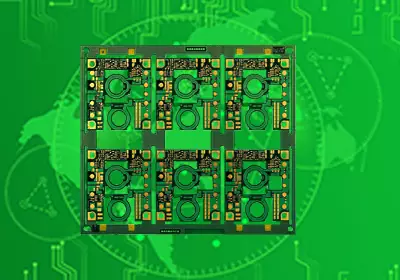
SMT refers to the abbreviated term for a series of processing steps performed on a PCB (printed circuit board). SMT stands for Surface Mount Technology, the most prevalent technique and process in the electronics assembly industry. Surface Mount Technology for electronic circuits, also known as surface mounting or surface-mount assembly, is a circuit connection technique. It involves mounting leadless or short-lead surface-mount components (abbreviated as SMC/SMD, or chip components in Chinese) onto the surface of a printed circuit board (PCB) or other substrate. These components are then soldered and assembled using methods such as reflow soldering or wave soldering. Typically, electronic products we use are constructed by arranging various capacitors, resistors, and other electronic components on a PCB according to the designed circuit layout. Consequently, diverse electrical appliances require different SMT assembly processes for manufacturing. The fundamental elements of SMT processing include: screen printing (or dispensing), placement (curing), reflow soldering, cleaning, inspection, and rework. Screen Printing: Applies solder paste to the pads on the PCB, preparing the board for component soldering. This process uses a screen printer, positioned at the very front end of the SMT production line. Dispensing: This process deposits adhesive onto specific locations on the PCB, primarily to secure components to the board. The dispensing machine is positioned at the very front of the SMT production line or after inspection equipment. Placement: This step accurately positions surface-mount components onto designated locations on the PCB. The placement machine is located after the screen printer in the SMT production line. Curing: This process melts the adhesive to firmly bond surface-mount components to the PCB. The equipment used is a curing oven, positioned after the placement machine in the SMT production line. Reflow Soldering: This process melts the solder paste to firmly bond surface-mount components to the PCB. The equipment used is a reflow oven, positioned after the placement machine in the SMT production line. Cleaning: This process removes harmful soldering residues, such as flux, from the assembled PCB. The equipment used is a cleaning machine, which can be positioned either inline or offline. Inspection: This process inspects the soldering quality and assembly quality of the assembled PCB. Equipment includes magnifying glasses, microscopes, in-circuit testers (ICT), flying probe testers, automatic optical inspection (AOI) systems, X-ray inspection systems, and functional testers. These can be positioned at appropriate points along the production line based on inspection requirements. Rework: This process involves reworking PCBs identified as defective during inspection. Tools used include soldering irons and rework stations. Rework stations can be positioned at any point along the production line.
Advantages of SMT Assembly: High assembly density, compact size, and lightweight electronic products. Surface-mount components are approximately 1/10 the volume and weight of traditional through-hole components. Adopting SMT generally results in smaller, lighter electronic products with enhanced reliability and vibration resistance. Low solder joint defect rate. Excellent high-frequency performance. Reduced electromagnetic and radio frequency interference. Facilitates automation, boosting production efficiency. Lowers costs by conserving materials, energy, equipment, labor, and time. Precisely because of the complexity of the SMT assembly process, numerous factories specializing in SMT component placement have emerged.