A Trustworthy PCB and Electronic Manufacturing Enterprise! Contact Us



The drone antenna is the critical communication lifeline for UAVs, directly dictating control quality, video clarity, and flight range. A high-performance antenna ensures reliability, low latency, and enhanced signal penetration.
Understanding Drone Antenna Types
The choice of drone antenna is dictated primarily by the application: whether you prioritize long-range control or stable, high-quality video feedback (FPV). Antennas are broadly categorized by their polarization and radiation pattern.
1. Linearly Polarized Antennas (LPA)
These antennas, such as simple dipole or monopole types, transmit and receive signals in a single plane (vertical or horizontal). They are straightforward, lightweight, and often the standard choice for basic remote control links. However, they are highly susceptible to multipath interference, where signals bounce off objects, causing drops or "ghosting," particularly in urban or cluttered environments.
2. Circularly Polarized Antennas (CPA)
CPAs, including popular designs like the Cloverleaf and Pagoda, transmit signals that spiral. This spinning nature provides superior resilience against multipath interference, as the receiver can distinguish the correct signal regardless of the angle at which it arrives. This stability makes CPAs the preferred choice for FPV racing and advanced cinematography, where signal reliability in dynamic flight conditions is paramount.
3. Directional vs. Omnidirectional
Omnidirectional antennas (like the dipole) radiate signals equally in all directions, offering flexibility but limiting maximum range. Directional antennas (like Yagi or Patch) focus power into a narrow beam. While they require careful aiming, they dramatically increase the control range and signal strength in that specific direction, making them ideal for long-range surveillance or tracking applications.
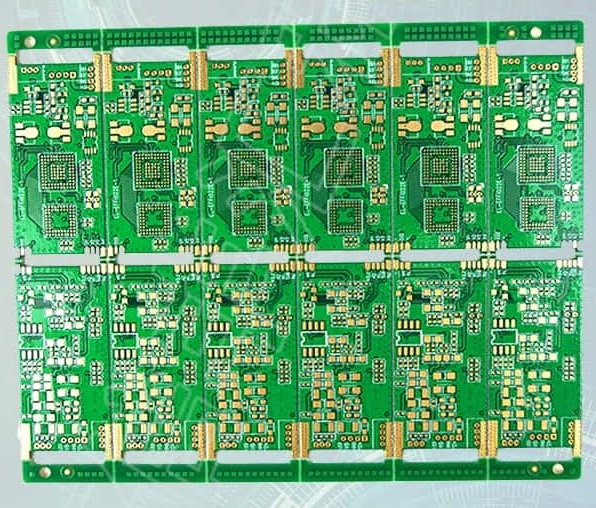
drone antenna
Key Performance Metrics for Selection
Selecting the correct drone antenna requires analyzing several technical specifications to ensure compatibility and maximum flight efficiency.
1. Frequency (GHz)
Drones primarily operate on 2.4 GHz and 5.8 GHz frequencies. The 2.4 GHz band offers better signal penetration through obstacles (like trees or buildings) and typically a longer range, but often faces saturation from Wi-Fi devices. The 5.8 GHz band offers higher bandwidth for clearer video transmission (less latency) but has a shorter effective range and less penetration capability. Your flight environment should guide your frequency choice.
2. Gain (dBi)
Antenna gain is a measure of how well the antenna converts input power into radio waves (in a specific direction) and vice versa. Higher gain (measured in dBi) usually means a stronger signal and longer range, but often at the expense of a narrower radiation beam. Pilots must balance high gain with the need for a wide coverage area, especially for freestyle or acrobatic maneuvers.
3. VSWR (Voltage Standing Wave Ratio)
VSWR indicates how well the antenna is impedance-matched to the system. A VSWR close to 1:1 is ideal, meaning the maximum amount of power is radiated, and minimal power is reflected back into the transmitter. A high VSWR signifies poor matching, leading to wasted power and potential damage to the video transmitter (VTX) or control transmitter (TX). Always aim for a drone antenna with low VSWR for reliability.
4. Polarization
For FPV systems, circular polarization is widely adopted to combat polarization mismatch and multipath interference. Ensure that both the transmitting antenna on the drone and the receiving antenna on the ground station (goggles or receiver) have the same polarization direction (Right Hand Circular Polarization - RHCP, or Left Hand Circular Polarization - LHCP).
5. Installation, Maintenance, and Optimization
Even the highest-quality drone antenna can perform poorly if not installed and maintained correctly. Attention to detail in setup is vital for reliable flight.
6. Placement and Isolation
The antenna must be mounted away from conductive materials, especially carbon fiber frames, which can block or distort the radiation pattern. Using an extension or mounting the antenna on a mast helps isolate it from the drone's electronics and battery, ensuring a clear signal path. Never power a transmitter without its attached antenna, as this can instantly burn out the transmitter component.
7. Connector Types and Matching
Standard connectors for small drones include SMA and RP-SMA. It is crucial to match the connector type (and gender) of the antenna to the transmitter/receiver port. Using adapters should be minimized, as each connection point introduces slight signal loss. Ensure all connectors are firmly tightened to prevent intermittent signal drops.
8. Maintenance and Inspection
Regularly inspect the antenna element for any physical damage, such as bends, cracks, or corrosion, which can drastically alter its impedance and radiation pattern. Check the coaxial cable for cuts or pinches. Proper maintenance ensures that the performance of your drone antenna remains consistent throughout its operational life.
Conclusion: The Critical Component
The performance of any UAV system is fundamentally limited by the capabilities of its communication link. Choosing, installing, and maintaining the correct drone antenna—be it a high-gain directional patch or a durable circularly polarized cloverleaf—is the most cost-effective way to immediately and reliably enhance flight range, video quality, and safety. For reliable FPV flying or professional long-distance missions, the antenna is not just an accessory; it is the critical component that defines success.