A Trustworthy PCB and Electronic Manufacturing Enterprise! Contact Us



In the modern era of electronics, "heat" is the silent enemy of performance and longevity. As devices become more compact and power densities increase, traditional glass-fiber substrates like FR4 often fail to dissipate heat efficiently. This thermal bottleneck can lead to component failure, reduced brightness in LEDs, or even catastrophic system crashes. To solve this, engineers have turned to a specialized hardware technology known as the metal-clad PCB. By integrating a solid metal core directly into the board structure, this technology provides a direct thermal highway, allowing heat to flow away from sensitive components faster than ever before.
metal-clad PCB
What is a Metal Clad PCB?
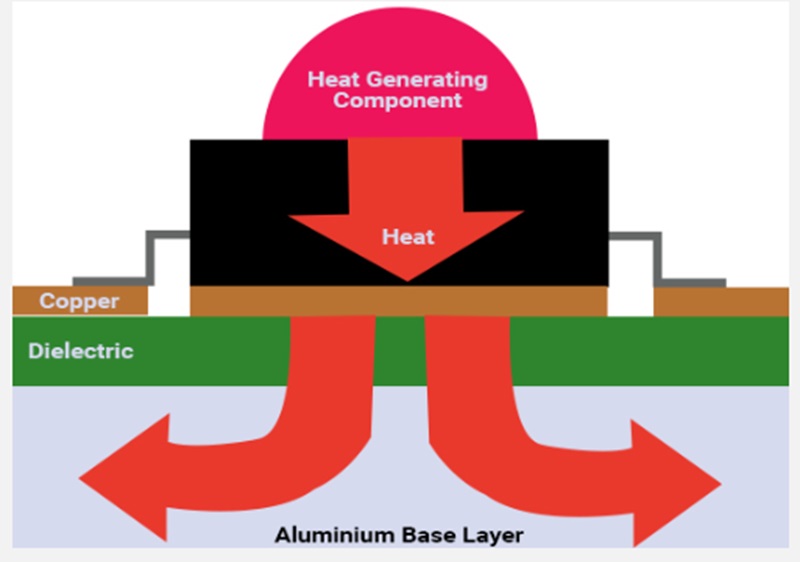
Unlike standard circuit boards made of epoxy and glass, a metal-clad PCB (also known as an MCPCB or Thermal PCB) consists of a layered "sandwich" structure designed for cooling. The top layer is the conventional circuit layer made of copper foil, where components are soldered. Beneath this lies the "magic" of the board: a specialized thermally conductive dielectric layer. This layer is electrically insulating but thermally conductive, acting as a bridge between the circuitry and the bottom layer—a thick metal base.
The metal base, typically made of aluminum or copper, acts as a massive heat sink for the entire assembly. This unique construction allows the board to maintain a much lower operating temperature even when driving high-current components, which is why it is the gold standard for power electronics.
The Core Benefits of Using Metal Substrates
Why should a designer choose a metal-clad PCB over a traditional multi-layer board? The primary advantage is thermal efficiency. In a standard FR4 board, heat must travel through the plastic-like material, which is a poor conductor. In contrast, a metal base can dissipate heat up to 10 times more efficiently.
Beyond cooling, these boards offer exceptional Dimensional Stability. Plastic boards tend to expand and warp when exposed to high temperatures, which can crack solder joints. Because the metal core has high rigidity and a predictable rate of thermal expansion, it keeps the components physically secure even in fluctuating environments. Furthermore, the metal base provides significant mechanical durability, acting as a built-in support structure that protects the delicate circuitry from physical impact and vibration.
Common Materials: Aluminum vs. Copper Base
When sourcing a metal-clad PCB, the choice of metal base is crucial.
Aluminum is the most popular choice by far. It offers a perfect balance of thermal conductivity, lightweight properties, and cost-effectiveness. Aluminum-based PCBs are found in millions of consumer products, from household LED bulbs to computer power supplies. It is easy to drill and process, making it ideal for high-volume manufacturing.
Copper, on the other hand, is the "high-end" alternative. Copper has significantly higher thermal conductivity than aluminum, but it is also heavier and more expensive. Copper-core boards are typically reserved for extreme applications, such as high-frequency telecommunications or high-performance electric vehicle inverters, where every degree of temperature reduction is critical for system safety.
Leading Applications in Modern Industry
The most visible use of the metal-clad PCB is in the LED Lighting Industry. High-power LEDs generate a concentrated amount of heat in a very small area. If that heat isn't removed, the LED will quickly dim or burn out. Metal-clad technology allows these lights to run at higher wattages while remaining cool to the touch.
In the Automotive Sector, especially with the rise of Electric Vehicles (EVs), these boards are used in motor controllers, charging systems, and DC-DC converters. The high voltage and current levels in EVs require hardware that can handle intense thermal loads without failing. Additionally, the Power Supply Industry utilizes metal-clad boards for solid-state relays and high-density power modules, where maintaining a stable temperature is key to energy efficiency.
Key Design Considerations for Engineers
Designing a metal-clad PCB requires a different mindset than traditional PCB design. One of the most important factors is the "Dielectric Layer." Since this layer sits between the electricity and the metal, it must be thin enough to conduct heat but thick enough to prevent an electrical short-circuit.
Engineers must also consider the "Stack-up." While single-sided metal boards are the most common, it is possible to create double-sided or even multi-layer metal-clad designs. However, these are significantly more complex to manufacture because the metal core must be pre-drilled and insulated to allow signals to pass through from one side to the other. Choosing the right thermal conductivity rating for the dielectric (measured in W/mK) is the final piece of the puzzle to ensure the board meets the specific cooling needs of the project.
Conclusion
As we move toward a future of faster charging, brighter displays, and more powerful electric motors, the demand for sophisticated thermal management will only intensify. The metal-clad PCB has proven to be an indispensable tool in the engineer's toolkit, providing the physical strength and cooling power that traditional materials simply cannot match. By understanding the materials, structure, and applications of these high-performance boards, manufacturers can build products that are not only more powerful but also significantly more reliable. In the high-stakes world of modern electronics, staying cool isn't just a luxury—it is a requirement that only a high-quality metal-clad PCB can fulfill.