A Trustworthy PCB and Electronic Manufacturing Enterprise! Contact Us



In the complex world of electronics assembly, the most sophisticated circuit design can fail due to a simple mechanical oversight. While engineers spend hours optimizing signal integrity, the physical mounting of the board is often an afterthought. However, ensuring that your hardware is securely elevated and insulated is a critical step. This is why pcb board spacers are considered indispensable components in any professional electronics enclosure. These small hardware pieces act as the backbone of your assembly, providing the necessary separation and support to keep your device running smoothly.
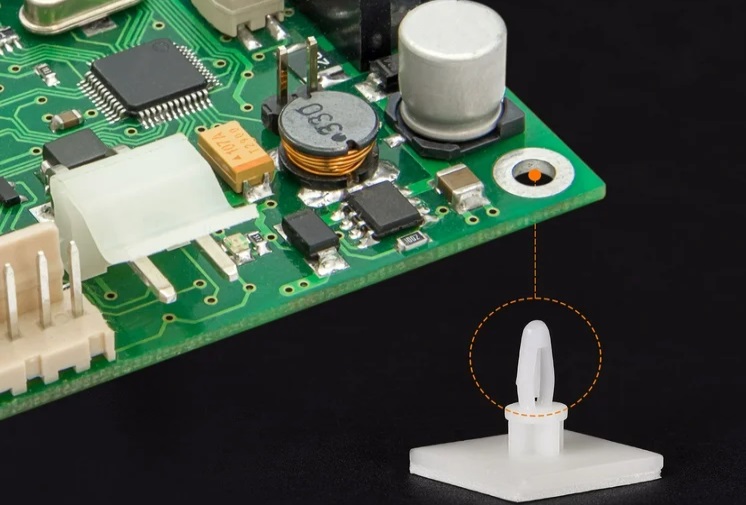
pcb board spacers
Why Are PCB Spacers Non-Negotiable?
The primary reason to integrate pcb board spacers into your design is to manage the physical relationship between the PCB and its enclosure. Without these components, several risks can jeopardize your project:
Electrical Isolation: If a PCB is mounted directly onto a metal chassis, the exposed solder joints on the bottom of the board will cause an immediate short circuit. By using high-quality pcb board spacers, you create a physical barrier that ensures the electricity only flows through the intended copper traces.
Airflow and Cooling: Heat is the enemy of electronics. Elevating the board allows for passive or active airflow underneath the components, preventing heat from being trapped against the enclosure walls.
Mechanical Stress Reduction: When users press buttons or plug in cables, the board experiences physical pressure. Spacers distribute this load evenly, preventing the PCB from flexing and cracking delicate surface-mount components.
A Detailed Material Comparison of Nylon & Metal
Choosing the right material for your pcb board spacers is a decision that impacts both the safety and the longevity of your product.
Nylon Spacers are the preferred choice for most consumer-grade electronics. Because nylon is a natural insulator, it provides an extra layer of safety by ensuring that no part of the mounting hardware can inadvertently ground a signal. Nylon is also incredibly lightweight, making it ideal for weight-sensitive applications like drones or handheld medical devices. Furthermore, nylon is resistant to many common chemicals and does not corrode in humid environments.
Brass and Stainless Steel Spacers are the workhorses of the industrial world. If your project will be exposed to extreme heat or heavy mechanical vibrations—such as inside an engine compartment or a factory control panel—metal is the clear winner. Metal spacers offer superior thread strength and can withstand much higher torque during assembly. Unlike nylon, metal spacers are conductive, which allows engineers to use them as a path for electrical grounding between the PCB and the chassis when necessary for EMI shielding.
Navigating Threads and Configurations
To ensure a perfect fit, you must understand the standard sizing used in the industry. Most pcb board spacers follow the metric "M" system:
M2 & M2.5: These are the micro-standards used in compact devices like smartphones, internal laptop modules, and small sensors.
M3: This is the universal standard for desktop computers, 3D printers, and most DIY hobbyist electronics.
M4 & M5: These larger sizes are reserved for heavy industrial equipment or mounting large power transformers.
Beyond the thread size, you must choose the right "style." Male-Female standoffs are common for stacking multiple boards like a skyscraper, where the male thread of one spacer screws into the female end of the next. Female-Female spacers are used when you want to secure the board with a screw from both the top and the bottom, offering a very clean aesthetic on the outside of the case.
Professional Tips for Proper Installation
Even the most durable hardware can fail if installed incorrectly. When mounting your pcb board spacers, the "Goldilocks" rule for torque is essential: not too tight, and not too loose. If you over-tighten a spacer, you risk creating "micro-cracks" in the PCB's fiberglass laminate, which can lead to intermittent signal failures that are nearly impossible to diagnose. In environments subject to heavy movement, such as automotive or aerospace applications, always consider using a small drop of thread-locking fluid to ensure your spacers stay secure over the lifetime of the product.
Conclusion
Precision in electronics is about more than just software and silicon; it is about the physical environment in which those components live. From preventing catastrophic short circuits to managing the thermal profile of your device, the right choice of hardware is vital. By selecting the appropriate material, thread size, and length of your pcb board spacers, you are investing in the long-term reliability of your product. Whether you are building a custom PC or a complex industrial controller, never underestimate the power of these small but essential pillars of hardware design.