A Trustworthy PCB and Electronic Manufacturing Enterprise! Contact Us



In the intricate world of electronics assembly, the quality of a single connection can determine the success or failure of an entire system. Soldering is the literal glue that holds our modern world together, but it is not always perfect. One of the most common and frustrating defects encountered by hobbyists and professional manufacturers alike is a faulty connection. To ensure your devices perform reliably over time, it is crucial to understand what is a cold solder joint, why it occurs, and how you can prevent this silent killer of electronic circuits from compromising your hardware.
The Definition and Characteristics
A cold solder joint is a defective connection where the solder did not melt completely or failed to flow properly during the soldering process. In a perfect world, a high-quality solder joint should look shiny, smooth, and have a distinct concave shape (often called a "fillet") that tapers toward the component lead.
When asking what is a cold solder joint, you should look for specific visual red flags. Unlike a healthy joint, a cold joint typically appears dull, grey, and grainy. It often looks like a lumpy ball of metal sitting on top of the pad rather than bonded to it. Because the metallurgical bond was never fully formed, the electrical path is weak, creating a high-resistance bridge that can lead to a variety of technical issues.
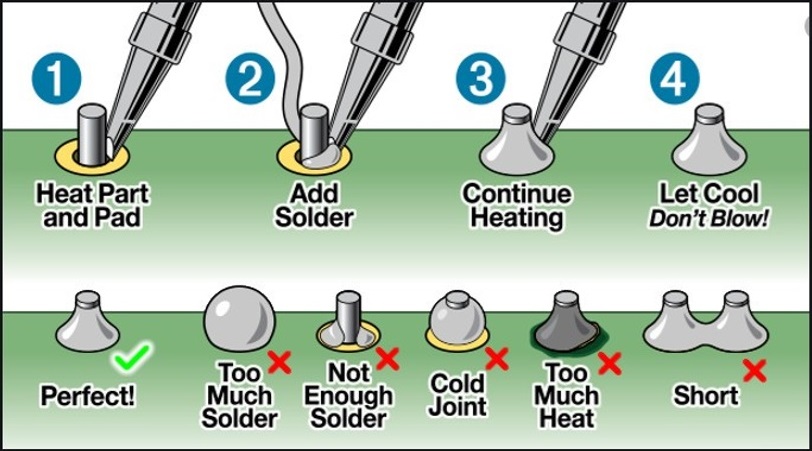
what is a cold solder joint
The Root Causes of Cold Solder Joints
Identifying the cause is the first step toward a solution. Several factors can lead to this defect during the manual or automated assembly process.
1. Insufficient Heat: The most common cause is simply not getting the components hot enough. If the soldering iron is set to a temperature that is too low, or if the iron is removed too quickly, the solder paste won't reach its liquidus state. The result is a "pasty" connection that lacks structural integrity.
2. Mechanical Disturbance: If a component moves even slightly while the solder is in its cooling (plastic) phase, the internal structure of the alloy is disrupted. This creates microscopic cracks within the joint. Understanding what is a cold solder joint often involves recognizing these "disturbed" joints, which look frosted or rough due to this untimely movement.
3. Surface Contamination: Oxidation on the PCB pads or component leads can act as a barrier. If the surfaces are dirty or oxidized, the molten solder will "bead up" instead of wetting the surface, resulting in a joint that looks attached but is actually just resting on the surface.
Why Cold Solder Joints are Dangerous
The real danger of a cold joint is that it often passes initial testing. A device might work perfectly in the factory, only to fail weeks later in the hands of a customer.
Cold joints are notorious for causing "intermittent failures." As the device heats up and cools down during normal operation, thermal expansion causes the weak joint to expand and contract. This can cause the circuit to break and reconnect randomly, leading to mysterious glitches that are incredibly difficult to diagnose. Furthermore, because these joints have higher electrical resistance, they can generate localized heat, which may eventually damage surrounding components or even cause a fire hazard in high-power applications.
How to Identify and Test for Defects
If you suspect your board has issues, knowing what is a cold solder joint visually is your best defense. A magnifying glass or a digital microscope is an essential tool for any electronics lab.
Beyond visual inspection, you can use a multimeter set to "continuity mode." However, be warned: a cold joint might still show continuity if the parts are physically touching. A more advanced test involves checking the resistance (Ohms) of the joint; a high or fluctuating reading is a clear indicator of a poor bond. For professional environments, X-ray inspection is often used to look "inside" the joint to ensure the bond is solid all the way through.
Prevention and Repair Strategies
Preventing these defects is much cheaper than repairing them. Always ensure your soldering iron is calibrated to the correct temperature for the specific solder alloy you are using (typically 350°C to 370°C for lead-free solder). Using high-quality flux is also vital, as it removes oxidation and helps the solder flow smoothly.
If you find a defect, the repair is usually straightforward: "re-flow" the joint. Apply a small amount of fresh flux, then use a clean, hot iron to melt the existing solder until it flows smoothly and bonds to the pad. Adding a tiny amount of fresh solder can also help by providing new flux and ensuring a proper fillet is formed.
Conclusion
Precision and patience are the hallmarks of great electronics manufacturing. A single weak link can ruin the most brilliant design, making quality control an absolute priority. By training your eye to recognize the dull, lumpy appearance of a failed connection, you gain a deeper understanding of what is a cold solder joint and how to maintain the highest standards of craftsmanship. Whether you are building a simple DIY project or mass-producing complex industrial controllers, mastering the art of the perfect solder joint is the key to creating products that stand the test of time.