A Trustworthy PCB and Electronic Manufacturing Enterprise! Contact Us


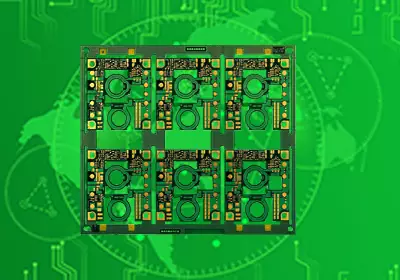
Unmanned aerial vehicles have transformed from specialized military tools into essential industrial solutions across agriculture, infrastructure inspection, geographic surveying, and cinematic aerial photography. Unlike stationary ground-based electronics, airborne systems must operate under unforgiving physical conditions. A commercial drone navigating high altitudes experiences severe vibration from high-RPM brushless motors, rapid thermal swings during descent, and sudden electrical surges during rapid flight maneuvers. A single soldering failure or impedance drop can lead to complete flight controller loss and an unavoidable crash. Building a certified UAV PCB requires precision engineering, combining heavy copper power handling, high-frequency signal shielding, and ultra-lightweight structural design to ensure uncompromised flight stability and long battery endurance.
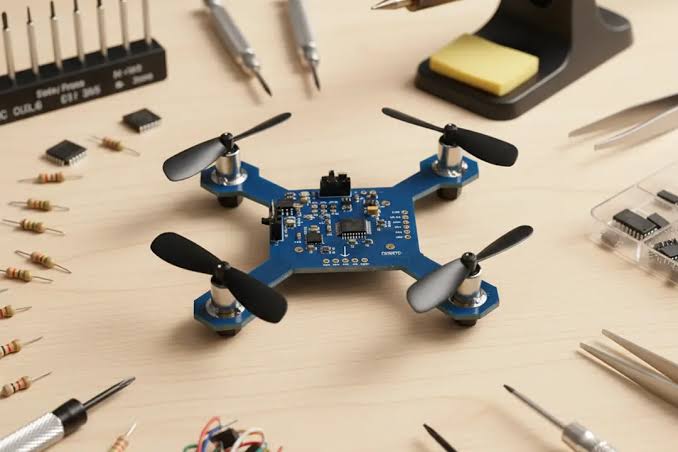
UAV PCB
High Current Handling for Electronic Speed Controllers (ESC)
At the core of every drone's propulsion system sits the Electronic Speed Controller (ESC). These modules translate throttle commands from the flight computer into multi-phase AC power that drives the brushless motors. During sudden maneuvers, such as punch-outs, fast climbs, or wind resistance compensation, the ESC experiences massive current spikes that can easily exceed several hundred amperes.
To prevent high-resistance bottleneck heating from damaging delicate control microchips, layout engineers utilize heavy copper layers ranging from 2oz to 4oz or higher. Thick copper traces minimize line resistance, ensuring maximum power transfer directly to the motors while preventing power drop-offs. Additionally, dense matrices of thermal vias are placed directly beneath power MOSFETs, transferring heat away from active switching silicon and into outer ground planes for efficient air-cooling during flight.
Weight Reduction and Rigid-Flex Integration
In drone engineering, every single gram of saved weight translates directly into extended flight time and higher payload capacity. Traditional hardware configurations that rely on individual rigid circuit boards connected by heavy copper wire harnesses add excessive weight and introduce multiple point-of-failure wire connectors that can shake loose under continuous rotor vibration.
Transitioning to an integrated UAV PCB design utilizing rigid-flex technology solves both weight and spatial challenges simultaneously. Rigid-flex substrates combine rigid fiberglass sections for mounting microprocessors with thin, flexible polyimide ribbons that route power and data signals seamlessly between different arms of the drone chassis. This integrated approach completely eliminates heavy plug-in header connectors, shrinks the total avionics volume, and significantly reduces overall weight while improving structural impact resistance.
Signal Integrity and Electromagnetic Interference Mitigation
Modern unmanned aircraft carry an impressive suite of sensitive wireless communications, including dual-band FPV video transmitters, long-range RC receivers, optical flow sensors, and precision GPS navigation units. At the same time, high-current ESC switching circuits generate substantial Electromagnetic Interference (EMI) that can corrupt delicate radio signals and cause navigation drift.
Designing a high-performance UAV PCB layout requires strict signal integrity management. High-frequency RF lines for video and telemetry are carefully routed over continuous ground planes with precise 50Ω impedance matching to prevent signal reflections. Engineers implement dedicated RF shielding cans over sensitive processing units and separate high-power motor traces far away from sensitive analog sensor buses. For long-range transmission systems, utilizing low-loss PTFE or Rogers high-frequency laminates ensures crisp signal quality even over vast distances.
Anti-Vibration Structure and Environmental Protection
Continuous mechanical vibration generated by high-RPM propellers poses a subtle but destructive threat to internal solder joints over extended operating hours. Solder joints subjected to constant micro-vibrations can develop structural micro-cracks over time, leading to intermittent power drops or sudden system reboots mid-flight.
To counteract these physical forces, a ruggedized UAV PCB employs structural underfill epoxy under large BGA microchips and heavy surface-mount components, locking them securely to the board. Furthermore, because drones operate outdoors in changing weather conditions, the completed circuit boards are sprayed with a protective layer of conformal coating. This thin coating seals the electronics, protecting delicate component pins from moisture condensation, ocean salt fog, and conductive dust picked up by high-velocity rotor wash.
Conclusion
Achieving high-altitude flight performance requires an uncompromising commitment to structural integrity and electrical reliability at every stage of the design cycle. As unmanned aerial systems continue to evolve into heavier industrial roles and long-range autonomous delivery networks, the pressure placed on internal flight controllers, power distribution boards, and ESC units will only intensify. Partnering with an experienced electronics manufacturing facility that understands the strict demands of a custom UAV PCB design ensures your flight systems remain lightweight, thermally balanced, and immune to high-frequency interference. By implementing heavy copper power planes, rigid-flex interconnects, and comprehensive conformal coating protection, your engineering team can build ruggedized airborne platforms that deliver maximum flight times and total operational safety under any flight condition worldwide.