A Trustworthy PCB and Electronic Manufacturing Enterprise! Contact Us



When we look at a modern smartphone, a sleek laptop, or the smart dashboard of an electric vehicle, we easily marvel at the sharp displays and responsive software interfaces. However, underneath these polished plastic and glass enclosures sits a complex, highly organized green world that makes all this magic possible. Historically, early electronic systems relied on point-to-point wiring, which created bulky, tangled nests of copper that were incredibly prone to breaking and impossible to mass-produce efficiently. The invention of the Printed Circuit Board completely revolutionized the tech world by providing a rigid, reliable, and microscopic platform to mount and connect components. If you have ever wondered what is pcb electronics, it is the foundational infrastructure that physically hosts and electrically interconnects every microchip, resistor, and capacitor inside your device, acting as the nervous system for almost all consumer and industrial hardware on the planet.
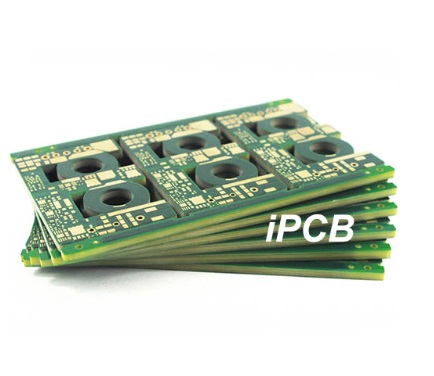
what is pcb electronics
The Anatomy of a Printed Circuit Board
To truly understand a printed circuit board, it helps to imagine it as a high-density miniature city. The foundation of the board is the substrate, traditionally made of a rigid fiberglass material known as FR4. This substrate acts as the bedrock, providing mechanical strength and ensuring that the board does not warp under thermal stress. Laminated directly on top of this substrate is an ultra-thin layer of high-purity copper foil. Through a chemical etching process, this copper sheet is sculpted into a maze of fine lines called traces.
In our miniature city analogy, these traces are the highways and local roads, while the electronic components soldered to the board are the skyscrapers and factories. Electricity travels down these copper highways to transport data and power between different chips. To protect these delicate copper pathways from environmental moisture and accidental solder shorts, the board is coated with a protective polymer resin called a solder mask. Finally, a white informational layer called the silkscreen is printed on top, stamping letters and numbers onto the substrate to guide technicians during assembly and troubleshooting.
The Critical Transition from Bare Board to Functional System
A common point of confusion for newcomers exploring the world of what is pcb electronics is the difference between a bare board and a finished assembly. When a fabrication house finishes chemical etching, the resulting item is simply a passive piece of plastic and copper. It has no computing power of its own.
The board only comes alive during the PCBA stage, where components are permanently attached to the copper pads. Factories achieve this through two primary methods. The first is Surface Mount Technology (SMT), where microscopic components are placed directly onto the surface of the board by high-speed robotic pick-and-place machines and melted into place inside a reflow oven. The second method is Through-Hole Technology (THT), where components with long metal leads are inserted into drilled holes, offering superior mechanical strength for heavy connectors and power transformers that face physical strain during use.
How Multi-Layer Boards Enable Miniaturization
As consumers demand increasingly thinner smartwatches and more powerful pocket computers, the real estate on a standard single-sided board becomes exhausted. To combat this spatial limitation, the engineering world evolved toward a sophisticated multi-layer architecture. When analyzing what is pcb electronics in premium consumer tech like gaming consoles or high-end servers, you are usually looking at a sandwich of up to ten or twenty independent copper layers packed into a single millimeter of thickness.
To link these isolated internal layers together, developers rely on microscopic drilled pathways called vias. Vias function exactly like vertical elevators in a multi-story building, allowing electrical currents to drop down or ascend to separate routing floors without interfering with nearby traces on the surface. This three-dimensional routing freedom allows engineers to cram miles of copper wiring into a space smaller than a business card, pushing the limits of modern device miniaturization.
Protecting and Finishing the Active Copper Surfaces
Because copper is a highly reactive metal, leaving the component pads exposed to the open air would cause them to oxidize rapidly, forming a non-conductive layer that prevents solder from adhering correctly. Therefore, finishing the active pad areas is a critical quality step when assessing what is pcb electronics manufacturing reliability.
Factories apply a surface finish over the exposed copper pads to guarantee long-term solderability. For budget-friendly applications, Hot Air Solder Leveling (HASL) washes the board in molten tin, leaving behind a durable protective coating. For high-density chips with sub-millimeter pin pitches, Electroless Nickel Immersion Gold (ENIG) is favored because the chemical gold layer creates a perfectly flat coplanar surface. This absolute flatness ensures that microscopic silicon processors can sit perfectly level on the board, eliminating alignment errors and securing a robust connection that will survive years of thermal expansion and physical vibrations.
Conclusion
Precision routing, material science, and robotic assembly are the core pillars that define modern hardware architecture. As global technology leaps forward into the frontiers of artificial intelligence, high-frequency 6G communication networks, and flexible medical wearables, the humble circuit substrate will continue to evolve into smarter, tighter, and more thermally efficient configurations. Demystifying what is pcb electronics helps us appreciate that innovation is not just about writing clean software code or designing sleek aesthetic outer shells; it is fundamentally about the rugged physical platforms that route billions of electrons smoothly every second. By establishing a solid understanding of layer stack-ups, surface finishes, and automated assembly standards, developers can collaborate effectively with fabrication partners, turning an initial schematic idea into a high-yielding, robust physical product that powers our interconnected world.