A Trustworthy PCB and Electronic Manufacturing Enterprise! Contact Us



For decades, the standard blueprint for electronic product manufacturing relied on rigid, flat substrates like FR4 to hold and connect components. While these green plastic boards are excellent for traditional boxy desktop computers or static appliances, they present a major geometric roadblock for modern, sleek consumer innovations. Today, devices are no longer restricted to rigid straight lines. As hardware screens begin to fold in half, medical sensors conform smoothly to human skin, and automotive modules squeeze into complex curved enclosures, the demand for a dynamic substrate has grown exponentially. Hardware development teams are heavily investing in a flexible pcb circuit board to overcome old structural limitations. By utilizing thin, elastic polymers instead of stiff fiberglass, this advanced technology allows circuits to bend, twist, fold, and roll without breaking a single electrical trace, fundamentally changing how engineers approach three-dimensional product design.
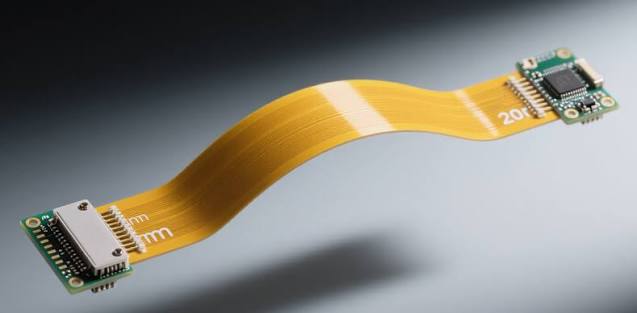
flexible pcb circuit board
The Physics Behind Endless Bending Capability
The secret behind the incredible elasticity of a soft circuit lies entirely in its material science. Instead of an inflexible resin matrix, the base substrate of a flexible system consists of an ultra-thin film of polyimide or polyester. Polyimide is an engineering polymer celebrated for its high thermal stability, excellent electrical insulation, and outstanding physical flexibility.
To create the conductive highways, manufacturers laminate a layer of Rolled Annealed (RA) copper onto the polyimide film. Unlike Electrodeposited (ED) copper used in standard rigid hardware—which is brittle and cracks quickly under tension—RA copper undergoes heavy mechanical rolling that elongates its internal grain structure grain along a single horizontal axis. This unique metallic orientation enables the copper paths to endure hundreds of thousands of intense bending cycles without suffering from mechanical fatigue, allowing the substrate to flex freely through microscopic radii inside tight moving hinges.
Wearable Technology and Smart Devices Applications
The ability to bend and conform to organic shapes makes the flexible pcb circuit board an absolute cornerstone of the rapidly growing wearable technology sector. Devices like advanced smartwatches, active fitness trackers, smart rings, and wireless earbuds must cram a massive array of biometric sensors, Bluetooth antennas, and power management ICs into a tiny chassis that mirrors the curved profile of the human body.
If an engineer attempted to build a smart ring using tiny broken segments of rigid boards, the device would be uncomfortably thick, heavy, and highly prone to connection failures at the micro-interconnect joints. A soft circuit substrate solves this spatial crisis by acting as a continuous, wrapping ribbon that glides along the inner circumference of the ring structure. Its paper-thin profile minimizes total component volume, dramatically reducing device weight while ensuring that delicate sensors remain in close, constant contact with the skin for flawless biometric data tracking.
The Revolution of Folding Screens and Compact Consumer Electronics
In the mainstream consumer market, the most prominent display of kinetic flexibility occurs inside next-generation foldable smartphones and dual-screen tablets. The defining mechanical hurdle of a folding phone is the central hinge zone, which experiences intense physical compressing and stretching every single time a user opens or closes the device. Utilizing a high-end flexible pcb circuit board ensures that multi-gigabit data signals from the main motherboard travel smoothly up to the folding display panel without experiencing attenuation or impedance drops during dynamic motion.
Beyond smartphones, this continuous flexing performance is heavily utilized in high-performance digital cameras and robotic drone platforms. In a mirrorless camera system, the rear LCD screen frequently rotates and flips out to accommodate difficult shooting angles, twisting the internal data wires repeatedly. Similarly, automated drone camera gimbals tilt and pan rapidly to stabilize aerial footage. Replacing standard copper wire bundles with flat, ribbon-like soft printed circuits allows these rotating joints to spin freely, completely eliminating wire entanglement risks and boosting mechanical survival rates over millions of rotations.
Medical Implants and Automotive Space Optimization
The ultra-thin, contour-hugging nature of soft electronics is also driving major breakthroughs in high-stakes fields like medical technology and advanced automotive design. In modern healthcare, diagnostics rely heavily on minimally invasive procedures. Devices like ultra-slim endoscopes and catheter-based imaging tools must navigate through winding, narrow human blood vessels. A microscopic flexible pcb circuit board fits perfectly inside these flexible tubes, routing high-definition camera signals directly from the tip of the scope back to the surgical monitors without stiffening the instrument.
Meanwhile, the automotive sector is undergoing a massive weight-reduction revolution to maximize the range of electric vehicles (EVs). Traditional car dashboards, internal climate controls, and battery management systems (BMS) utilize heavy, bulky wire harnesses that add unnecessary weight and require intensive manual labor to install. Modern automotive tier-one suppliers are replacing these wire nests with long, custom-contoured soft circuit strips. These layouts strip away pounds of dead weight, roll smoothly into the curved contours of the car frame, and dramatically accelerate factory assembly line speeds through single-plug connection blocks.
Conclusion
Embracing dynamic physical movement within electronic design represents the next major evolution in industrial hardware engineering. While standard stiff substrates will always maintain a secure place in large-scale static power grids and stationary computing towers, the frontiers of micro-electronics, smart wearable monitoring, and kinetic folding displays demand a platform that moves in harmony with the product package. Designing a premium flexible pcb circuit board layout gives you the ultimate freedom to squeeze maximum processing power into unconventional shapes, eliminate heavy plug-in wire connectors, and protect data signals from mechanical vibrations out in the field. By mastering copper grain direction constraints and collaborating with precision fabrication facilities early in the development timeline, your design team can smoothly transition bold creative concepts into highly profitable commercial realities that set your brand apart in the global tech marketplace.