A Trustworthy PCB and Electronic Manufacturing Enterprise! Contact Us



The success of any complex electronic system depends on more than just the microprocessors and passive components; it relies on the integrity of the connections between them. In an era where modular design and serviceability are paramount, the PCB pin connector stands as the indispensable bridge that links different circuit modules. Whether you are building a prototype using an Arduino or designing a high-density industrial controller, these connectors provide the mechanical stability and electrical conductivity required to keep signals flowing accurately. Selecting the right connector ensures that your device remains robust, easy to assemble, and resistant to the environmental stresses of daily operation.
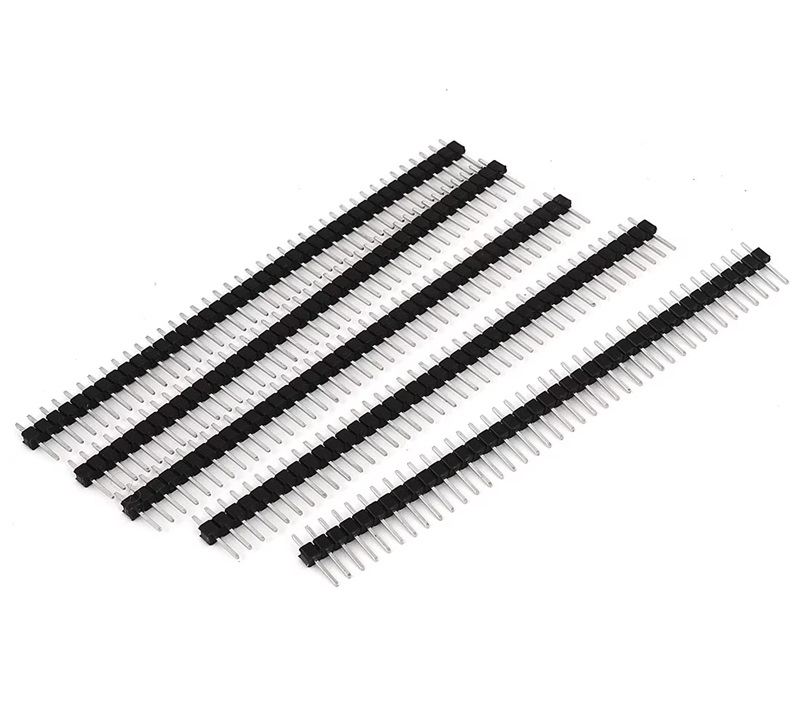
PCB pin connector
What is a PCB Pin Connector?
At its most fundamental level, a PCB pin connector is a device used to join two printed circuit boards or to connect a board to a wire harness. It typically consists of a series of conductive metal pins held together by a plastic insulating base. These are often used in pairs: the "Male Header," which features protruding pins, and the "Female Receptacle," which contains sockets designed to receive those pins.
The beauty of this design lies in its simplicity. By standardizing the distance between pins, manufacturers can create modular systems where components can be swapped or upgraded without the need for desoldering. This versatility makes them a staple in everything from high-end aerospace equipment to everyday household appliances.
Key Specifications for Engineering Excellence
When specifying a PCB pin connector for your design, several technical factors must be considered to ensure compatibility and longevity.
---Pitch (Distance Between Pins): The "Pitch" is the measurement from the center of one pin to the center of the next. While 2.54mm(0.1 inch) is the industry standard for most hobbyist and industrial applications, modern compact electronics often require much smaller pitches, such as 2.0mm, 1.27mm, or even 0.5mm for ultra-dense designs.
---Mounting Style: Designers must choose between Through-Hole Technology (THT) and Surface Mount Technology (SMT). THT connectors offer superior mechanical strength, making them ideal for ports that will be frequently plugged and unplugged. SMT connectors, on the other hand, are perfect for high-speed automated assembly and save valuable space on the opposite side of the PCB.
---Plating Materials: The finish on the pins plays a huge role in performance. Gold plating offers the best resistance to corrosion and is ideal for low-voltage signal transmission where contact resistance must be kept to a minimum. Tin plating is a more cost-effective alternative, suitable for applications with fewer mating cycles and less exposure to harsh humidity.
Applications Across High-Tech Industries
The versatility of the PCB pin connector allows it to serve various sectors with different requirements. In the world of Consumer Electronics, these connectors are found in smart home devices and gaming consoles, facilitating internal connections between the mainboard and user interface panels.
In Industrial Automation, reliability is the top priority. Connectors used in PLC (Programmable Logic Controllers) or motor drivers often feature shrouded headers or locking mechanisms to ensure the connection remains secure despite the heavy vibrations of factory machinery. Similarly, in the Automotive sector, specialized connectors with high-temperature resistance are used to link sensor modules to the vehicle's central computer, ensuring safety-critical data is transmitted without interruption.
Why Quality Matters
It can be tempting to choose the cheapest possible interconnect, but a low-quality PCB pin connector is often the weakest link in a system. Poorly manufactured pins may suffer from "gas-tight" failures, where oxidation builds up between the pin and the socket, leading to intermittent signal loss or increased heat generation. High-quality connectors are manufactured with precision tolerances to ensure a consistent "mating force," meaning they are easy to plug in but stay firmly in place once connected. Investing in quality hardware during the design phase significantly reduces the long-term costs associated with warranty repairs and field failures.
Conclusion
Precision and connectivity are the hallmarks of modern hardware innovation. As devices continue to evolve toward higher speeds and smaller form factors, the role of the humble PCB pin connector remains as vital as ever. By understanding the nuances of pitch, plating, and mounting styles, engineers can select a solution that perfectly balances cost with high-end performance. Whether you are scaling a mass-production run or building a bespoke industrial tool, the right interconnection strategy is the key to a reliable, professional-grade product. Ultimately, choosing a premium PCB pin connector is an investment in the stability of your technology and the satisfaction of your end users.